What To Do When Your Horse Says No
By Nikki Alvin-Smith

There are many reasons that your horse may be unwilling to acquiesce to your requests. Recalcitrant behavior in the horse or display of a poor attitude toward completing a task have common causes such as soreness, stubbornness or self-protection.
While rogue behavior in a horse can emanate from a genetic mental or physical issue, most horses won’t go against working under saddle and complying with rider’s requests out of malice. Unknown historical training experiences or environmental factors such as herd dynamics, daily horse care protocols and rider talent can play a role in a horse deciding to plant his hooves petulantly in the sand and exhibit a hard “No”.
For the trainer, once obvious issues of soundness or illness, tack fit, diet/exercise regime for the horse have been reviewed, the accountability for poor equine behavior is usually assumed to be the horse’s lack of understanding of the demands being made.
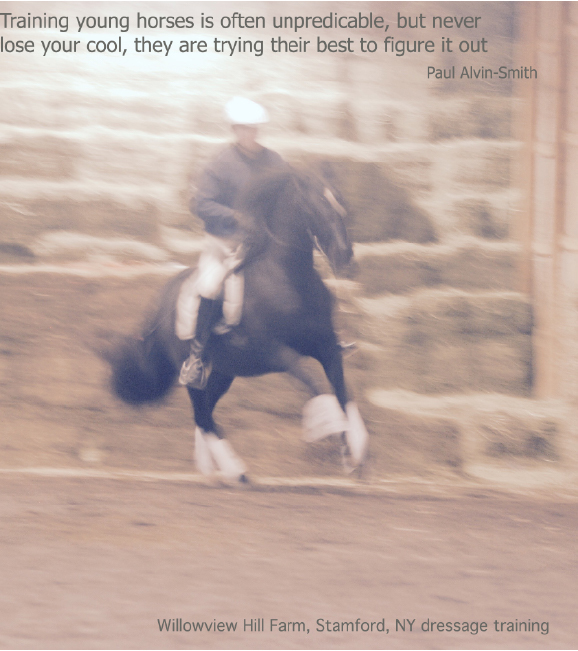
It is common for the more experienced horse trainer to regard the poor attitude the horse showcases as simply being something to be worked through and different approaches to resolve the issue are often conducted in an effort to overcome the problem. Which is a valid route to take in many instances.
However, it is also true that professional trainers can become too comfortable with their assessments of a horse’s root issue with work. Especially if like most professionals the yard is busy and full of performance horses and riders at different levels all vying for attention. It is easy to become rote in the approach taken to behavioral problems the equid exhibits and to unwittingly use force or revert to bad habits perhaps utilized prior, such as tiring the horse into submission or going to tack and gadgets to manipulate the animals actions.
As a clinician I work with many students (both the horse and human variety) that are working under the tutelage of another trainer. After decades of giving clinics worldwide, many of the issues I see horse and rider face are similar no matter what the country or breed of horse. And when it comes to the horse stopping play, the feedback the noble wee beastie is giving its rider can certainly be hard to ascertain within the space of an hour’s lesson. It is not uncommon to see similar issues within a particular yard across very different horses and students. Which of course indicates fairly clearly that the problem lies at the trainer’s feet in one way or another.
Usually after a few pertinent questions have been asked, the rider and and/or their trainer reveal that there has been a pattern of negative behavior in the horse. Often blamed on previous trainers or previous owners of the equine, the problems that are presented to me as a clinician are sometimes disclosed before the lesson time begins and sometimes not. Either way, they come to light. It is almost inevitable that issues will service under pressure. The lead up to clinic time usually involves the in-house trainer and rider/horse working extra hard to prepare for the event pushing the animal closer to a breaking point, and the tension created by being in front of a gallery of their equestrian peers doesn’t help the rider and does not relax the horse.
So what should you to do when your horse says “No” – what is the remedy?

The solution is sometimes heralded as being to sell the horse off to someone else. Deleting the horse from the repertoire of performers on stage at your yard is one way to go, and for the insecure trainer/rider this can actually be a good idea. Problem is, it won’t be long before another horse comes into the yard and another problem surfaces. All horses are truly individuals and not all horses get along with all people, and while a new partnership does offer a great opportunity to start over, this is a short-term answer.
The best piece of advice I have to offer equestrians who either bring horses to my private farm for re-training or help with moving the horse along in its competence and confidence levels or to those that present their horses at off-site lessons/clinics is to self-evaluate. Which I understand is hard to do. But often the simplest of reasons for poor behavior in the horse is overlooked in the quest to fix an issue. Throwing money at the problem rarely solves it.
I suggest to horse owners and their trainers, “If you want your horse to change its attitude then you’ll have to change yours.”
Not at all easy to do, especially when you’ve been following a program or ritual of training protocols for years and earnestly believe that for 90% of horses these rules and routines seem to work. I count myself in this group of horse professionals and I too consider myself a work in progress. Constant evaluation and self-examination is necessary to continue to develop ourselves in the horse-human equation. And continued education is essential to this process.
It is exceedingly easy to get caught up in the ‘busy’ aspect of business development in the training/competing of horses and to forget to truly treat the particular horse in front of you as an individual. To engage in a relationship at a deeper level than just seeing the horse as a means to an end can easily go out the window, especially if you’ve lost heart horses along the way and have trouble connecting on that deeper level with animals you know are likely to leave your yard in a short matter of time or at the drop of hat because they belong to someone else.
Unfortunately unless you commit to focusing on one horse one at a time, and put in the work to establish a deep bond and relationship built on trust and understanding of each other over time, you will never realize the full potential of the animal in question. And that is an opportunity missed for both horse and human. Instead of worrying about when or where the equine may land now or in the future, take this valuable offering of interaction and dedication to the horse and engage 150% in its life. Consider the time spent as a gift each of you is giving the other. Both of you will learn from it and carry it with you through your lives regardless of what the future holds.
How can you self-evaluate your horse care and training habits? Begin with the simpler things.
Some examples:
Is your style of barn management set in stone and each horse treated the same way schedule wise such as all turned out for set hours, stabled for set hours? Think about the things that you may do as rote and whether they actually suit each horse. Some horses can live perfectly happily in a field 24/7 with some company while others want more human interaction or ‘busy’ time to keep them mentally content. A change up in a horse’s routine or environment and social connections can make a world of difference in how it behaves and its ability to focus come schooling time.
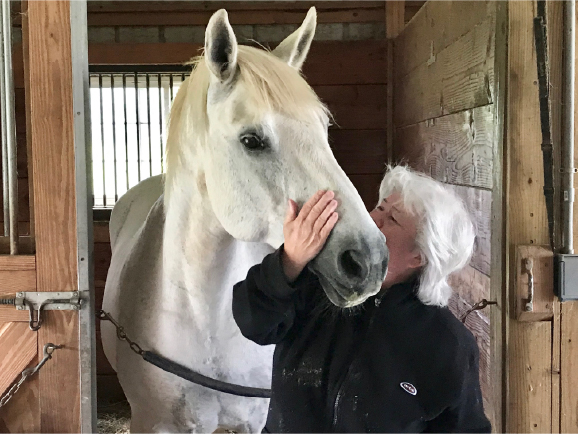
Observe your own routines. Do you stop and pet a horse if it comes to you for attention or are you too busy and the interaction is a relegated to a brusque hard pat on the neck that must suffice (and which of course many horses actually don’t especially like)? Do you warm each horse up exactly the same way for a training session or do you regard each horse individually and amend the warm up based on the individual equine’s conformational and mental strengths and weaknesses? Do you expect consistency from the horse but fail to be consistent with your own aids and instructions?
Whatever the behavioral problem a horse exhibits you don’t have to wait to rule out the obvious causes to give a hard look at all the components that make up the animal’s life. It is likely there is more than one factor at play, and almost certainly there is a domino effect or ripple effect involved in the matter.
Outside of the biblical sense of the expression, “Seek and ye shall find,” is the proverbial meaning to the quote. We do owe our horses the effort to try and figure out the truth, even if it means knocking on our own stable door.