


Top 10 Budget Backyard Horsekeeping Hacks
By Nikki Alvin-Smith
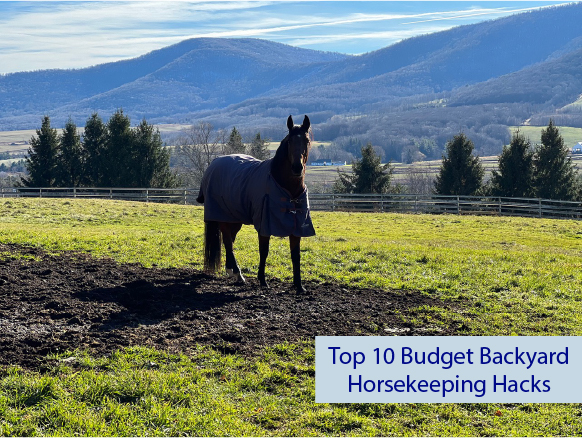
My beautiful horse, stood waiting for me!
But what of the work and the cost of his care
To realize your dream of having him there…
I manage I guess, but I will say it’s tough
Sometimes I struggle to buy all the stuff
I do find it hard to cover expenses
The hay, the bedding, the barn and the fences
Would you like a few simple tips to save cash?
Yes please! I’ll grab them quick as a flash
Tip # 1
Building the dream of backyard horsekeeping starts from the ground up, as logically that is where major expenses begin. When you are working on managing costs, it’s a good system to start with the most expensive items first and work the way down the list to the minutiae. So for the backyard horse owner, who let’s assume already owns a suitable backyard for horse care, start with the barn.
Best options that will do the job of providing shelter for the horse and storage for supplies such as hay and bedding are the simplest structure designs. A horse doesn’t even require four walls, a roof and a door for shelter needs. Three walls and a roof will do. Consider the humble run-in shed as an extremely effective option on a small farmette.
Build it yourself options don’t require a tremendous amount of building experience. Ensure that any wood in ground contact such as poles are rated as ‘ground contact pressure treated’ and not just ‘pressure-treated’. There are plenty of videos for self-help on You Tube so give it a look before you run out and buy one.
Tip # 2
Given that the property offers some form of open space suitable for pasture for grazing or a dry lot for turnout the property will need to be fenced and the land managed.
Divide and conquer the space by splitting the area into at least two separate paddocks. This will allow a fallow period to rest each space allowing it to protect/recover it from overuse or overgrazing.
Least expensive method to maintain it is by mowing it out twice a year, once in late Spring and again late Fall to control weed growth, and a tine harrow used across the pasture during the heat of summer will spread manure piles and expose worm eggs to the hot sun causing them to die.
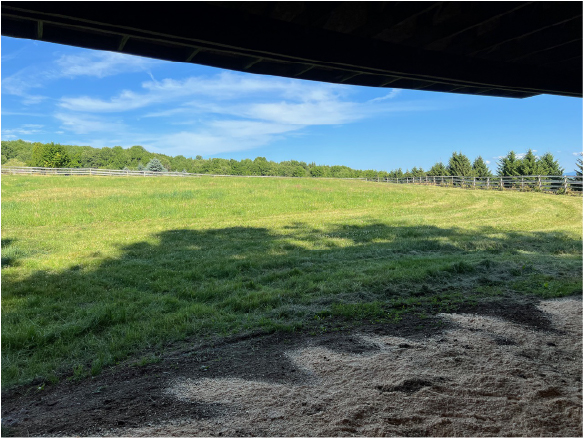
Picking up manure is a time-consuming business though a good idea. But remember the manure will need to be managed. See Tip #5 below for ideas on how to accomplish this task.
Tip # 3
Fencing is always expensive to install but a good job done at the start will save much time and angst later. If possible opt for wooden posts and at least one wooden board around the top for stability and safety with wire fencing or electric fencing beneath.
No climb wire can help keep local dogs and wildlife out of the paddock but can look unsightly unless the perimeter is kept strimmed and free of weeds.
Electric rope/wire can be utilized on T-posts with safety caps installed as a cheaper option.
A trough will suffice as a water source and can be filled with a hose pipe but it should be kept clean and fresh especially in hot weather. Harsh winter weather will necessitate some form of water heating system such as a tank heater. These run about $30 - $50 per month to run and must be plugged into a grounded outlet with cable protected from weather. Frost-free water dispensers are another option but require pipes to be buried below the frost line.
Tip # 4
Hay or dry forage of some sort will be necessary to supplement the horse’s diet even if it is kept at pasture on a large property, particularly in cold winter months. The cheapest hay you find is not likely to be optimal safety wise for horses. Select good quality properly cured (less than 14% moisture-tested) ‘clean and green’ hay, meaning weed free and green as a dollar bill.
Most expensive buying option and worst quality offerings will likely be found at the local feed store or box store. Questionable and inconsistent grade hay will likely be found at hay dealers. Best buying option and best quality hay will be direct from the farmer that produced it. Smaller bales are generally much better quality than large rounds/squares. Buy by quality, not by weight. Here are some tips on hay buying.
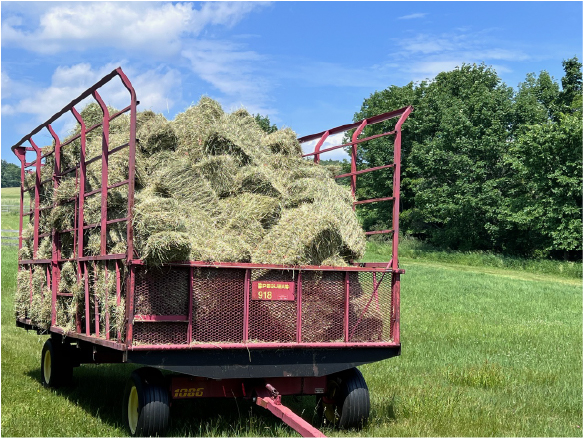
Find a good resource and stick with it. Ask if there is a possibility for the farmer to store hay on your behalf (expect to prepay and pay slightly extra for this service and get a clearly written/signed document of terms if prepaying).
Tip # 5
Add rubber mats to stalls or interiors of run-in sheds to maximize longevity of bedding and provide best comfort for horses. Buy bedding supplies in large quantities rather than as you go if possible for cheaper price negotiation.
Frequent mucking out will save money on bedding supplies in the long run. Manure disposal can be expensive. An option is to build a compost pile and sell the manure locally or offer it for free to neighbors for their vegetable or flower gardens. The latter will help you establish a positive relationship with neighbors concerned about livestock being close to their properties.
Manage fly control on the manure pile using organic solutions. Here are some compost management techniques.
Tip # 6
Pasture companions for the solo horse don’t have to be another large animal to feed. Consider small equids like donkeys, minis or goats. The latter can double up as weed control on the property but will require good fencing.
Tip # 7
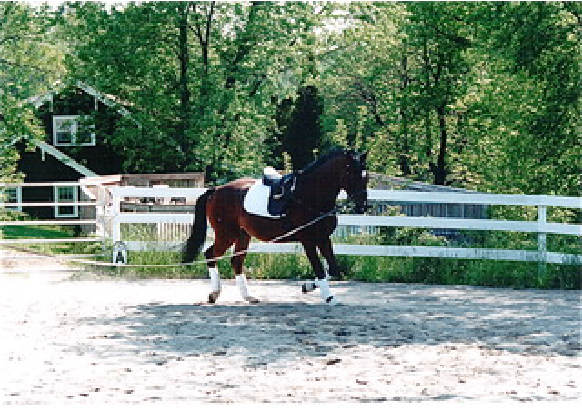
Your horse will likely appreciate being kept exercised. While you may not have the budget for installation of a proper riding ring, riding the horse in a level area within a paddock space is a useful way to work the horse at home if trails are not available close by.
During my days as a professional trainer I have coached riders in all sorts of places. While grass rings can get slippery and rutted, a decently level small surface can suffice for basic work at home.
During our humble beginnings my hubbie and I had a small dressage ring just training level size (approx. 65’ x 65’). We added a limestone based concrete sand to it eventually and it always sloped slightly in one direction, but it worked just fine. It was regularly harrowed with a small tine harrow on an ATV and watered with a sprinkler.
Tip # 8
Double use extends to equipment you may have such as a horse trailer. During winter months it can be used to store bedding/hay supplies. But bear in mind it then won’t be readily available for horse transport in an emergency.
Review options for using overhangs for winter shelter spaces for equipment and supplies and consider double use ideas for empty stalls or other areas.
Tip # 9
To defray expenses and to help manage labor resources consider inviting a friend to keep their horse or equid on your property. You will then have a ready to go riding buddy, someone to share expenses and you will find it easier to get vet and farrier to the property for routine and emergency visits.
Tip # 10
Take your horse barefoot to save on shoeing expenses. A barefoot farrier is not just less expensive to employ for hoof trims than for shoeing with associated costs, but barefoot horses can actually stay sounder longer than their shod companions.
A barefoot trim is not simply pulling shoes and leaving the horse without a metal plate. It requires rounding of the hoof and keeping it balanced. My favorite ‘go to’ resource on this is David Ramey DVM. My experience as an advanced level dressage rider and performance horse breeder working all our horses barefoot for over twenty years has been extremely positive, including competing at FEI level events. So I can attest personally to the significant benefits of the practice.
All Rights Reserved. Copyright ©2025 N. Alvin-Smith - Author