
Make Some Money With A Layover Horse Barn
by Nikki Alvin-Smith

Horse facility business owners are always looking for new ways to boost their bottom line, and depending on where the property is situated there is an often-overlooked opportunity that can make them money by simply opening up the barn door to a broader geographical group of equine aficionados. What is this mystery money-maker? It is the layover barn.
The realm of operating a layover barn can either be the key business or an adjunct service to regular horse boarding that addresses a basic need for temporary horse accommodation. And if you really want to get into offering a full-service layover facility include housing opportunities for the human contingent too. Think of the traditional layover barn as a horse and human Airbnb, with rooms for the driver of the horse rig and their companions plus a dry lot area or stalls for the equines on board.
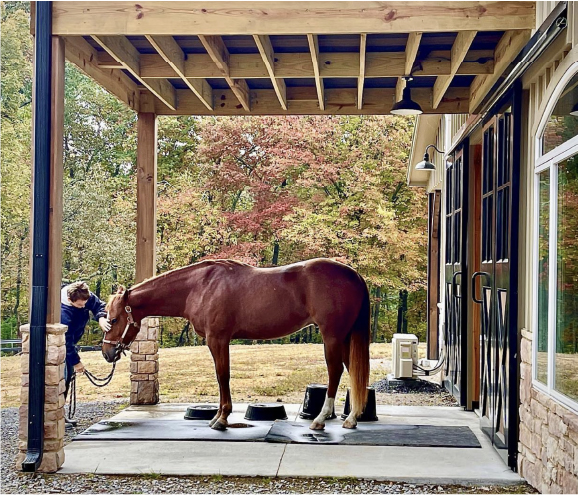
The addition of an RV/camper hook up on site could also bring in customers that run trucks/trailers with integrated living spaces who wish to stable their equine passengers in the layover barn but have their own living quarters available.
Location of the property matters because a certain level of hoof and foot traffic will be needed to meet the metrics required to make running a layover facility make sense. Prime proximal locations for a layover barn are as follows:
· Large animal clinics or hospitals
· Major arterial transport route such as an Interstate
· Racetracks
· Private showgrounds
· Public showgrounds
· Major or minor airports with USDA facilities
The Layover Barn Must Haves
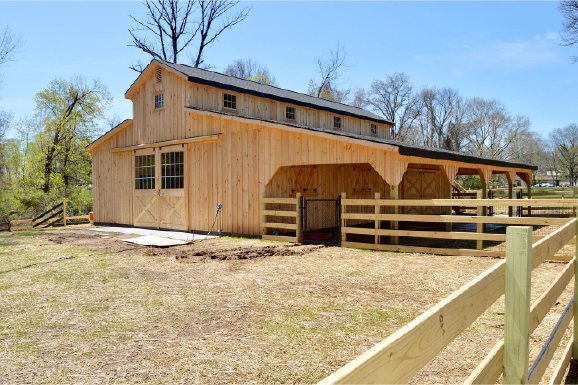
The prerequisites to consider for any layover barn is the quarantine aspect. Horses move from State to State with documentation such as Health Certificates, with vaccination history incorporated into passports. Keeping the horses that travel together in a separate location and distance from other animals on the property is an important health safety aspect for both the equids that are currently full-time farm residents and those that are being hauled from A to B.
Horses that are competing at the higher levels of competition such as the F.E.I. levels or those destined for export are subject to very specific criteria for stabling or turnout area proximity to other horses en route. By following the guidelines for distances issued for export quarantine facilities you can help ensure your layover option can be marketed as a premier location offering horse owners and transport agents confidence that you know what you are doing.
However, these distances and guidelines are not always possible to adhere to on smaller lots. And barns traditionally are placed fairly close together for service access and efficient management practices. This lack of distance doesn’t prevent a farm from offering layover facilities, but stabling horses close to those arriving from off farm should be avoided.

The layover barn should also be designed for easy deep cleaning. Drains, floor mats, sealed wood surfaces etc. should always be included in any barn design but are particularly important for layover barns. Especially if the facility has close proximity to a vet clinic or hospital, where recently discharged equid patients may be brought in for temporary housing prior to long distance travel.
If a dry lot or some paddock space is destined for use for layovers then the fencing should be very secure and the area well-maintained. The paddock should not share fences with other horse neighbors during its use for layover and ideally any manure will be cleaned up daily to help mitigate the risk of spread of worms or disease.
Access for large horse transport vehicles is important. Aside from big areas for reversing and turning around also ensure there are no low-hanging tree boughs or overhead cables.
Security of the facility is also something to consider for both the benefit of the farm owner and the visitors. CCTV or video monitoring of some sort is easy to accomplish and its use should be posted at a highly visible spot so everyone is aware of its use. Rules for notifications vary by State so check your local ordinances and follow them. Be certain to implement some sort of background research for people that wish to book your facility before they arrive, so you are aware who your customers are and where they are coming from and going to. It is important for example, that horses recently acquired from a kill-pen or auction are quarantined. Owners that are transporting their own horses will have the advantage of knowing their animals well and be able to properly manage their needs and activities.
Many horses that travel back and forth to competition circuits are very valuable. Ensure that your insurance coverage for property damage, and liability for offering stabling/turnout for horses as well as human visitors is up to date. Always execute a clearly written booking contract with the prospective customer in advance of their arrival on site and identify their responsibilities and barn rules of operation. This may include hours of operation; use of certain facilities on site such as riding spaces; refund practices for delayed or postponed arrival; care, custody and control insurance responsibilities; property damage responsibilities; administration of medications; use of human areas of the facility such as swimming pools, firepits, outdoor/indoor facilities.
Always take a deposit or some sort of payment before customer arrives as a booking fee. It is a good idea to take full payment on arrival as otherwise early departure schedules may occur that leave you chasing accounts receivable. Be cognizant of refund policies for services such as Venmo, Paypal etc. and be wary of sharing your bank account information directly with people you do not know.
Best Horse Barn Designs For Layover Facilities
An ideal scenario for a layover barn is to build it according to expected purpose. Modular horse barns facilitate great options for specific customizations and keep prices on point. Leading modular horse barn producers offer financing and ‘to-the-penny’ quotations and accurate timelines for the build, and this can make the purchase and construction process very pleasurable.
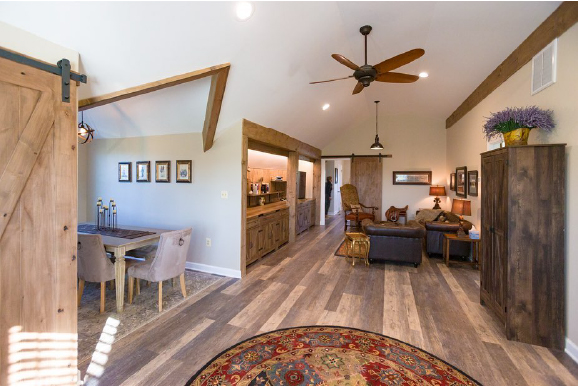
Barndominiums offer a great way to provide both horse and human habitation on one footprint. Here is the backstory of one innovative barn owner that utilized a Barndo design to boost income and offer specialty services. Layover services can always be used temporarily as a foothold to owning your own dream horse barn by helping to pay the way.
Center aisle barns also offer the opportunity to customize downstairs areas for human habitation directly alongside the horses.
Enjoy this short read that showcases how a Monitor horse barn has been used in a unique and innovative manner to serve both as a police horse retirement home and a layover facility.

Shedrow and Low-Profile barn designs are also good options for layover facilities. Their budget-friendly nature and opportunity to add more stabling as necessary down the line is a bonus.
Marketing Your Layover Facility
It’s no good building your layover facility and sitting back expecting people to find it. Implementing a marketing strategy is essential and finding your target audience and converting them to customers takes some work. Aside from word-of-mouth to through your immediate circle of friends, consider social media pages/posts and digital magazine ads that cater to the performance horse industry. Other marketing ideas include visiting your local horse clinic and let them know about your services and offer referral commissions; contacting local horse show venues or advertising in their programs; becoming a licensed export facility; adding your facility to booking platforms under their specialist sections such as Airbnb.